
How a lead-focused exhibition is helping build awareness and action around an invisible environmental health threat.
A traditional eyeliner sample tested at a lead-focused exhibition in Ethiopia registered 1,000,000 ppm of lead, which is far beyond the established limits. The finding was one of several that made an otherwise invisible risk visible, giving visitors something concrete to understand and discuss.
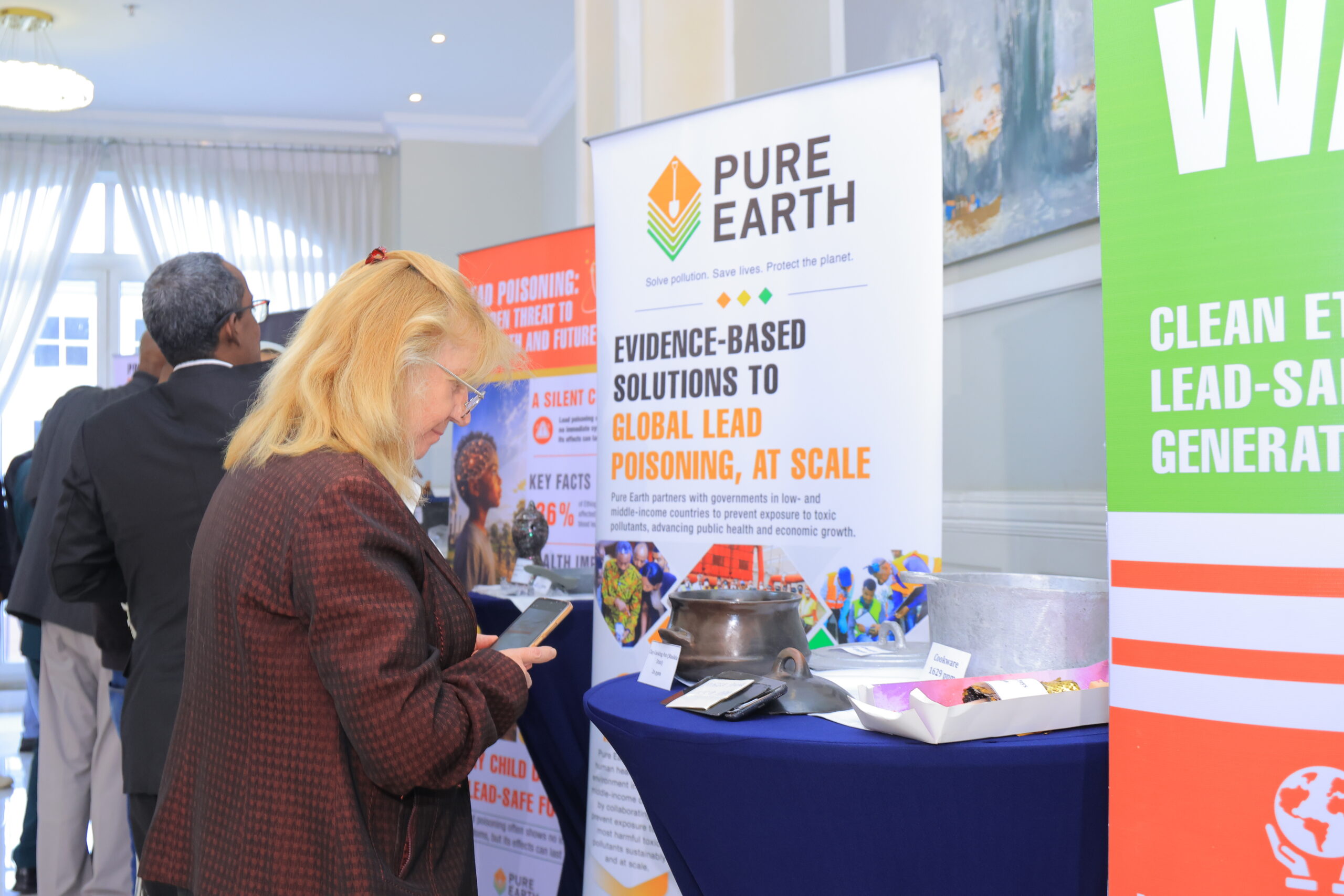
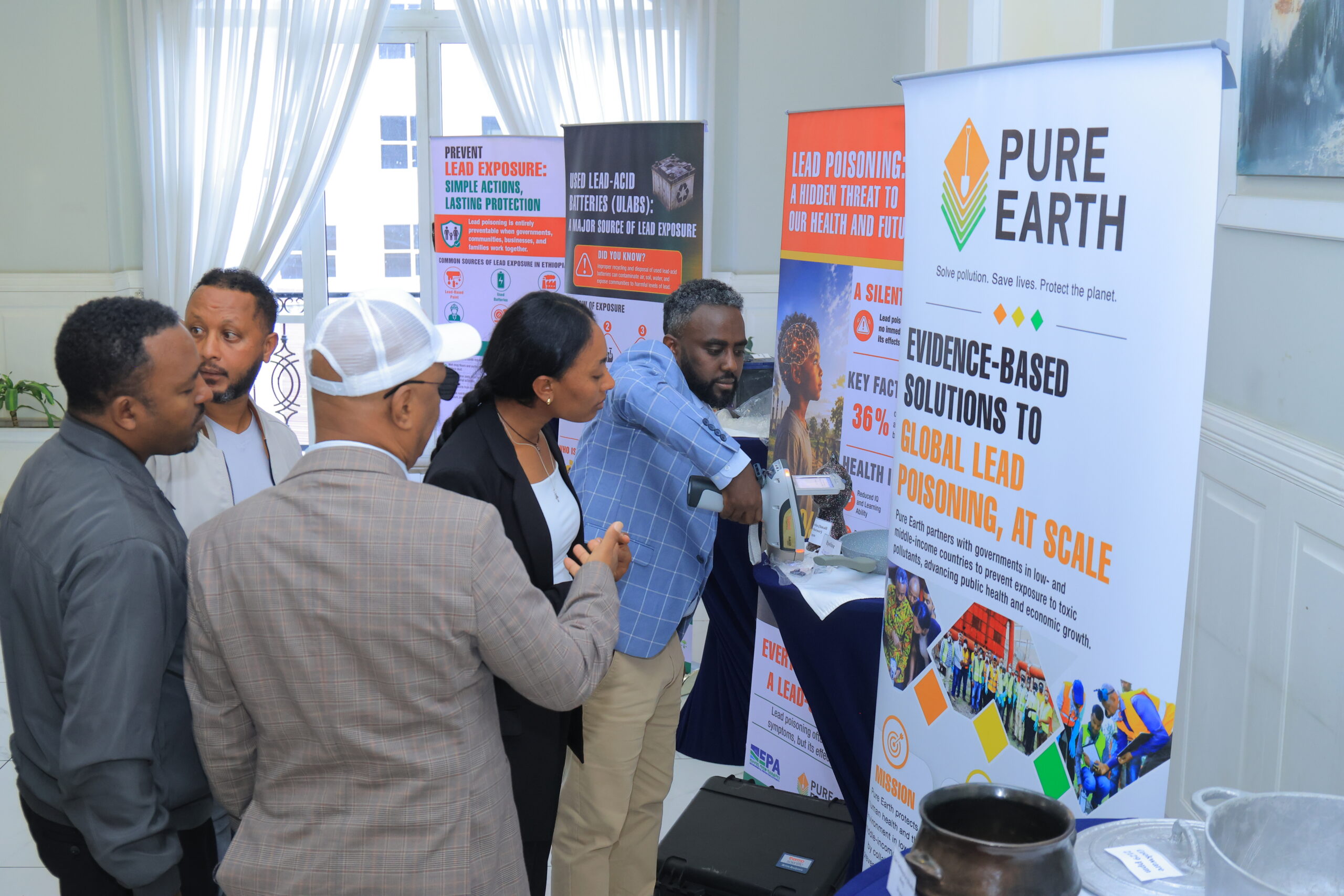
At a lead-focused exhibition organized by Pure Earth in collaboration with the Ethiopian Environmental Protection Authority (EPA) as part of the September 7 launch of the Clean Ethiopia for Generations campaign, everyday products and materials were tested using x-ray fluorescence (XRF) technology, giving participants a direct look at lead levels in products and materials that might otherwise go unnoticed.
The findings revealed just how close lead exposure is to our daily life. Alongside the 1,000,000 ppm detected in the traditional eyeliner sample, a used lead-acid battery showed 769,600 ppm and a cookware sample registered 1,629 ppm. These were not abstract numbers or distant laboratory samples. They were measurements from familiar products and materials that people encounter in everyday life.
The reaction was immediate. Government officials, technical experts, development partners, media representatives, and members of the public stopped to examine the figures, often looking again as they absorbed what the results revealed. Many expressed surprise on learning that familiar household goods could contain such high concentrations of lead, and that potential exposure could come from items they encounter, purchase, or use without realizing the risk. For many visitors, the exhibition transformed lead contamination from an abstract environmental health issue into something tangible and deeply personal.
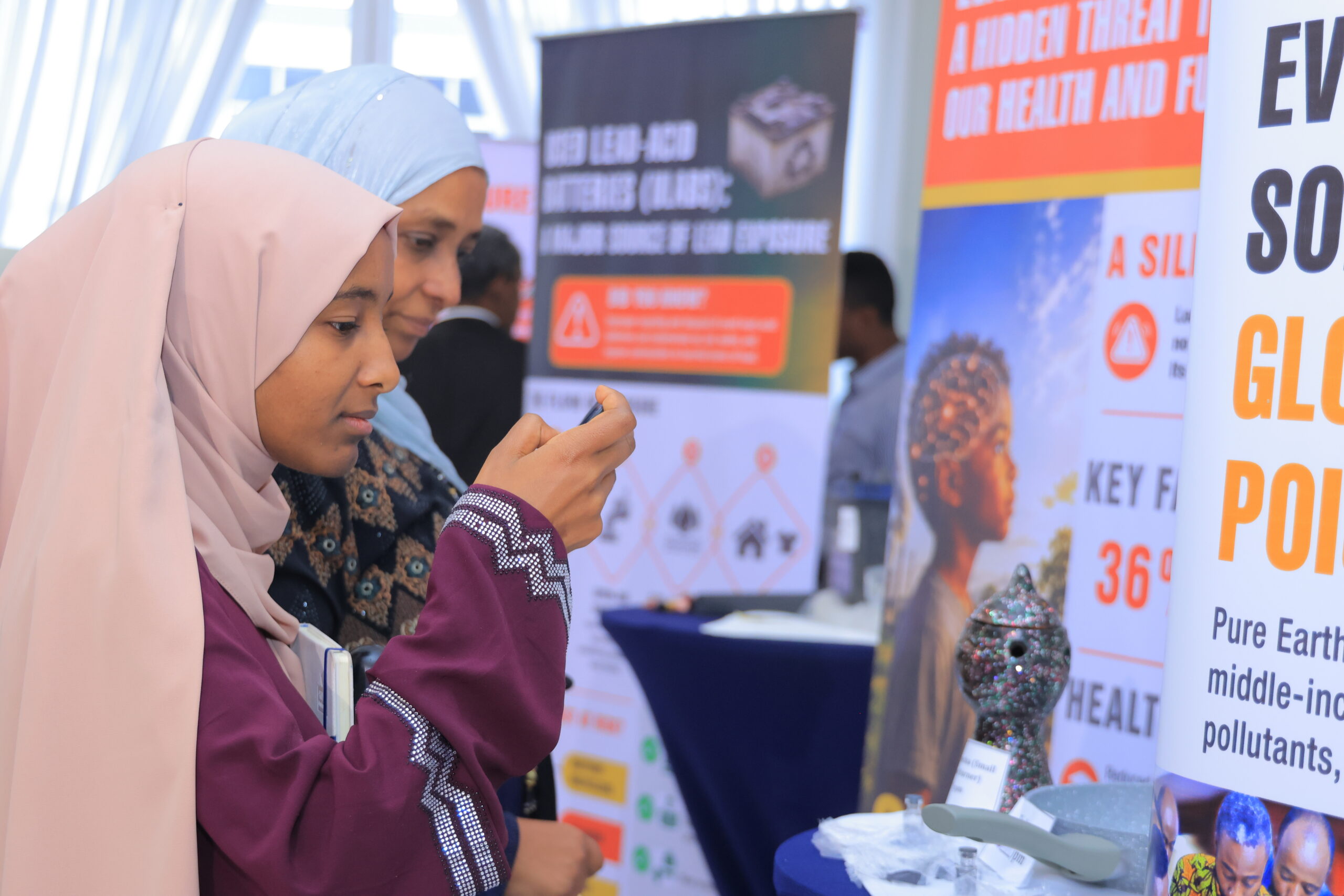
“Seeing the evidence firsthand changes how people understand the risk. An invisible threat suddenly becomes real and personal,” said Mulat Teshome, Senior Environmental Monitoring and Inspection Expert at EPA. “Awareness is a starting point for prevention. When people understand the potential risks in the products and environments around them, they are better equipped to ask questions, seek reliable information, and support efforts to protect their families and communities. Exhibitions like this can help spark those conversations and carry them beyond the event itself.”
Lead exposure can come from multiple sources, including lead-based paint, informal used lead-acid battery recycling, contaminated soil and dust, e-waste, drinking water and plumbing materials, consumer products, and certain occupational activities. Preventing exposure therefore requires attention not only to industrial and waste-management settings but also to the products and environments where people live and work.
“A clean Ethiopia must also be a lead-safe Ethiopia. Preventing exposure to hazardous substances such as lead is essential to building a healthier Ethiopia for present and future generations,” said Frenesh Mekuria, Deputy Director General of EPA.
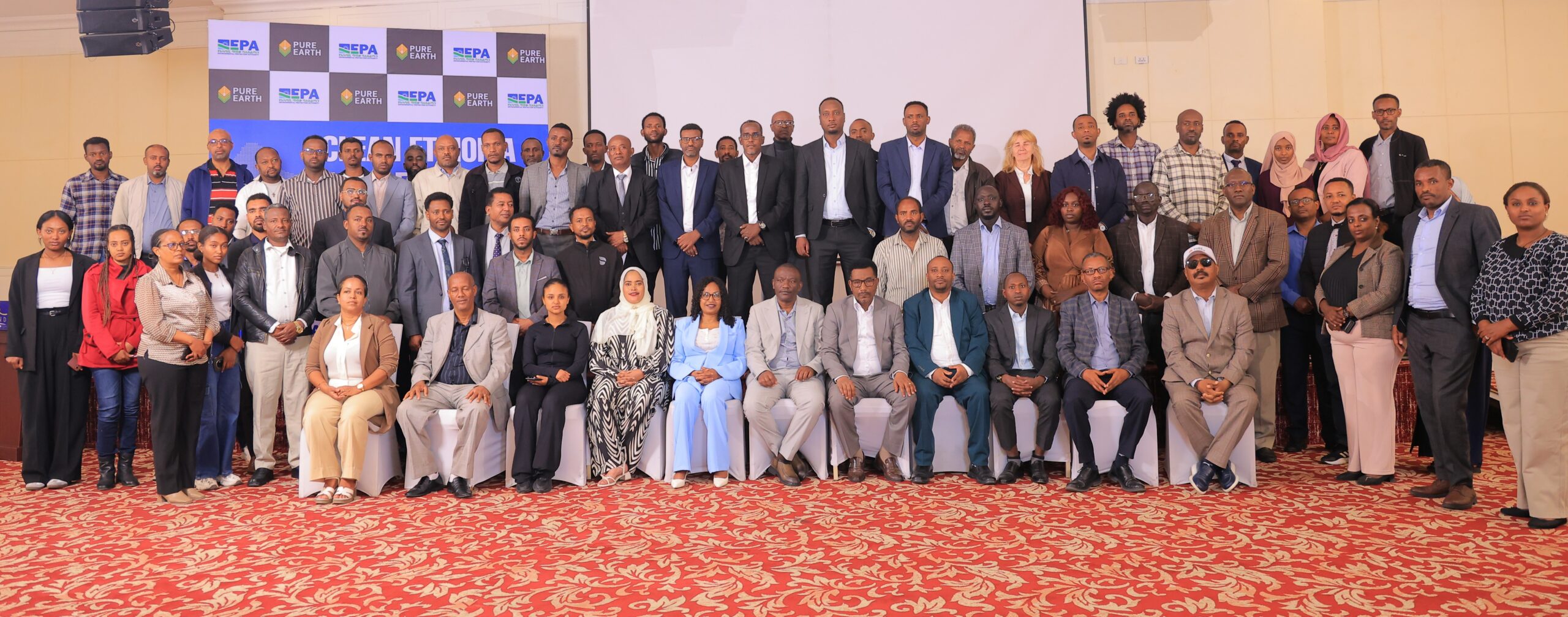
The Clean Ethiopia for Generations Campaign launching event brought together government and regulatory institutions, technical experts, private-sector representatives, and other stakeholders to examine the policy, regulatory, institutional, and operational challenges surrounding hazardous chemicals and waste management in Ethiopia.
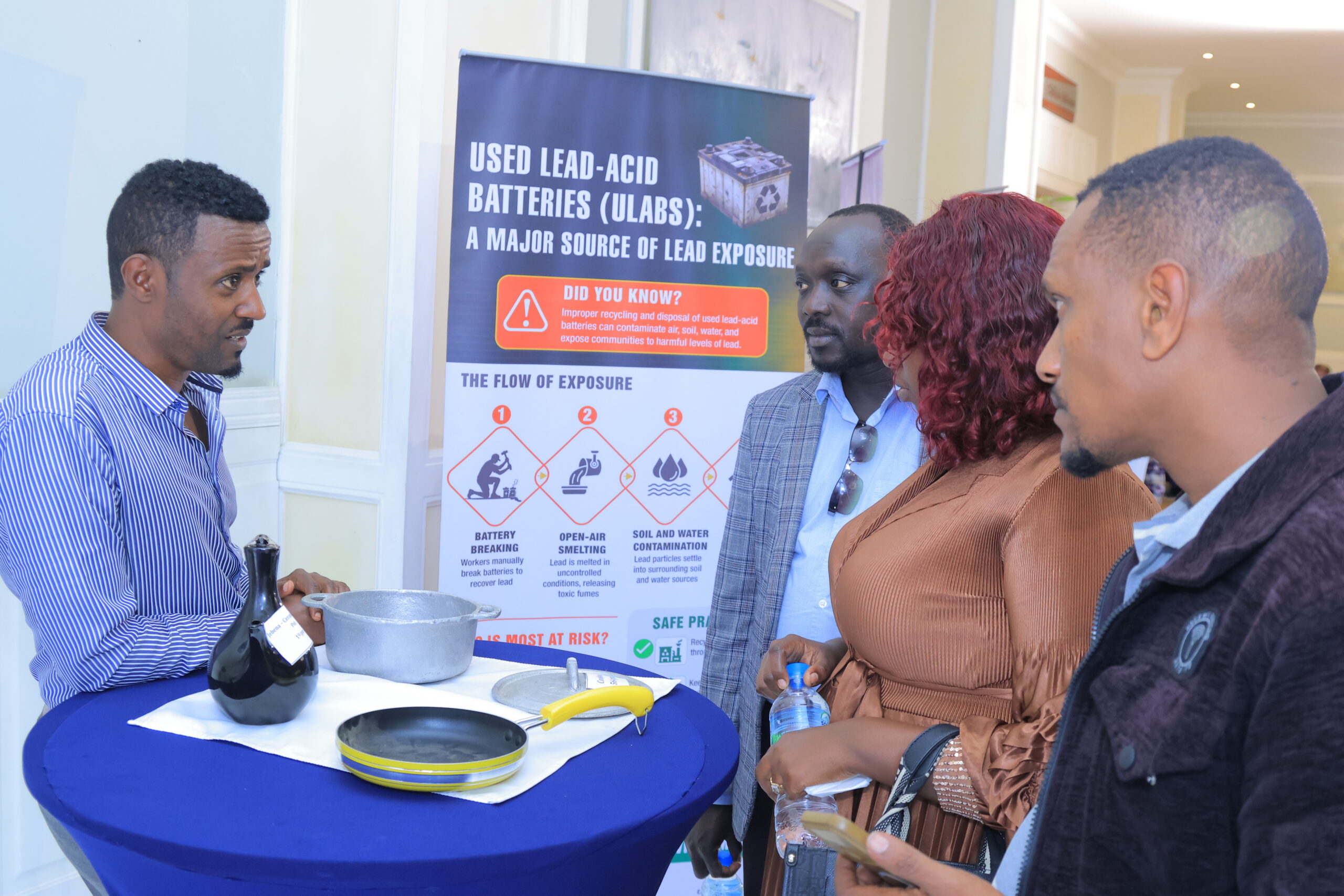
Within this broader national conversation, lead exposure prevention emerged as a clear priority. The exhibition added a practical dimension to that conversation by giving participants evidence around which to discuss risk, prevention, and action.
Making these risks visible is an important first step. But awareness alone cannot prevent exposure. It must be matched by systems that identify, regulate, monitor, and reduce sources of lead through effective regulation, targeted testing, compliance monitoring, and coordinated national action.
Ethiopia has already taken important steps to address lead exposure, including the Lead Paint Regulation No. 429/2018, the establishment of the National Lead Coordination Committee and Technical Working Group, and the development of the 2026–2030 National Costed Roadmap for Lead Exposure Prevention. Under the Lead Paint Regulation, the maximum allowable lead content in paint is set at 90 ppm, supported by requirements for testing, labeling, and compliance monitoring. This measure provides the policy and institutional foundation needed to prevent lead exposure at its source and strengthen enforcement. It also demonstrates a growing national commitment to a coordinated, evidence-based approach to lead poisoning prevention.
Efforts are also advancing to identify potentially contaminated sites, strengthen technical capacity, and deepen partnerships. However, continued attention is needed to improve compliance monitoring, testing, battery management, health surveillance, and inter-sectoral coordination.
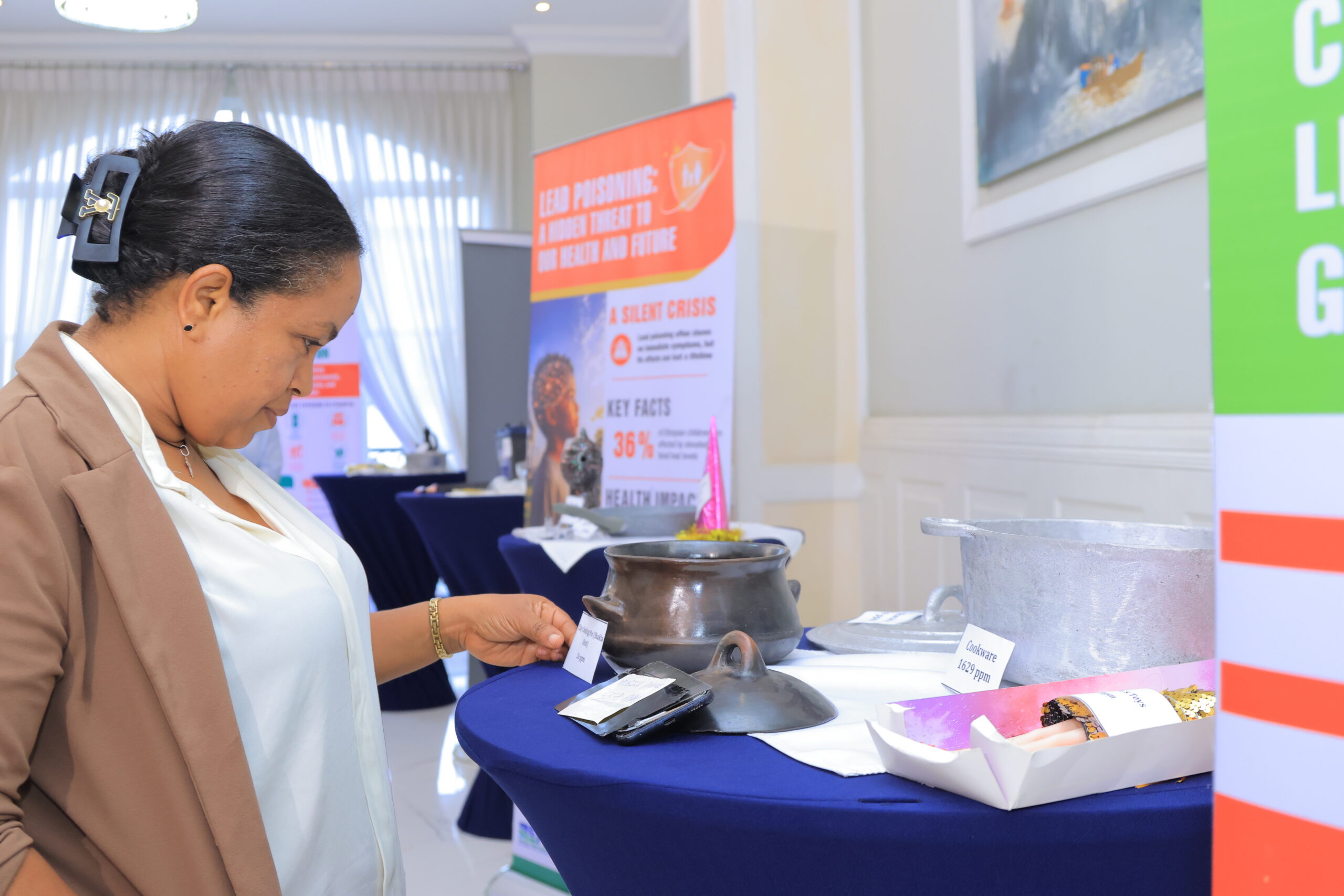
For Biratu Gerba, a participant from the Benishangul-Gumuz Region, the exhibition was a wake-up call. “I had never thought about lead this way. I was shocked to see the levels detected in products that look so ordinary. We use many of these things every day without thinking about what they may contain. Now I understand that preventing lead poisoning has to start with awareness, knowing what is in the products and materials around us.”
For Dr. Melese Damte, an Environmental Law Professor at Addis Ababa University, the exhibition underscored a broader meaning of what it takes to build a cleaner Ethiopia. “Clean Ethiopia should mean more than keeping our surroundings free of visible waste. It should also mean preventing toxic pollution that can harm people’s health even when we cannot see it. Lead prevention deserves to remain part of this national conversation.”
The collaboration between EPA and Pure Earth is connecting policy and everyday experience to shape public understanding, while the Clean Ethiopia for Generations campaign provides a platform to extend the message beyond policy and technical circles through community events, exhibitions, information materials, media engagement, advocacy, and stakeholder dialogue. By combining evidence, testing, communication, and stakeholder engagement, Pure Earth is helping bridge the gap between technical findings and the everyday lives of citizens, policymakers, and the media.
Sustaining this momentum will require translating awareness into action: strengthening compliance and monitoring, expanding testing and measurement, improving the management of used lead-acid batteries, assessing potentially contaminated sites, and strengthening health surveillance and coordination across sectors. Through the Clean Ethiopia for Generations campaign, this message can reach communities, workplaces, schools, households, and markets, helping people recognize potential sources of lead exposure and understand how risks can be reduced.
Protecting people from lead exposure must remain part of building a healthier and safer future for generations to come.
The lead-focused exhibition and the broader Clean Ethiopia for Generations campaign are helping build momentum for Ethiopia’s continued response to lead exposure. By bringing lead poisoning into public awareness and creating space for dialogue among government institutions, technical experts, development partners, the media, and the public, the campaign is helping strengthen the visibility and urgency of lead prevention. This momentum will be particularly important as Ethiopia prepares to launch its National Roadmap for Lead Exposure Prevention during International Lead Poisoning Prevention Week (ILPPW). As a national guiding framework for implementation, the roadmap will provide a foundation for translating growing awareness and commitment into coordinated action.
How a lead-focused exhibition is helping build awareness and action around an invisible environmental health threat. A traditional eyeliner sample tested at a lead-focused exhibition in Ethiopia registered 1,000,000 ppm of lead, which is far beyond the established limits. The finding was one of several that made an otherwise invisible… Read More The Pollution Blog
How a lead-focused exhibition is helping build awareness and action around an invisible environmental health threat.
A traditional eyeliner sample tested at a lead-focused exhibition in Ethiopia registered 1,000,000 ppm of lead, which is far beyond the established limits. The finding was one of several that made an otherwise invisible risk visible, giving visitors something concrete to understand and discuss.
At a lead-focused exhibition organized by Pure Earth in collaboration with the Ethiopian Environmental Protection Authority (EPA) as part of the September 7 launch of the Clean Ethiopia for Generations campaign, everyday products and materials were tested using x-ray fluorescence (XRF) technology, giving participants a direct look at lead levels in products and materials that might otherwise go unnoticed.
The findings revealed just how close lead exposure is to our daily life. Alongside the 1,000,000 ppm detected in the traditional eyeliner sample, a used lead-acid battery showed 769,600 ppm and a cookware sample registered 1,629 ppm. These were not abstract numbers or distant laboratory samples. They were measurements from familiar products and materials that people encounter in everyday life.
The reaction was immediate. Government officials, technical experts, development partners, media representatives, and members of the public stopped to examine the figures, often looking again as they absorbed what the results revealed. Many expressed surprise on learning that familiar household goods could contain such high concentrations of lead, and that potential exposure could come from items they encounter, purchase, or use without realizing the risk. For many visitors, the exhibition transformed lead contamination from an abstract environmental health issue into something tangible and deeply personal.
“Seeing the evidence firsthand changes how people understand the risk. An invisible threat suddenly becomes real and personal,” said Mulat Teshome, Senior Environmental Monitoring and Inspection Expert at EPA. “Awareness is a starting point for prevention. When people understand the potential risks in the products and environments around them, they are better equipped to ask questions, seek reliable information, and support efforts to protect their families and communities. Exhibitions like this can help spark those conversations and carry them beyond the event itself.”
Lead exposure can come from multiple sources, including lead-based paint, informal used lead-acid battery recycling, contaminated soil and dust, e-waste, drinking water and plumbing materials, consumer products, and certain occupational activities. Preventing exposure therefore requires attention not only to industrial and waste-management settings but also to the products and environments where people live and work.
“A clean Ethiopia must also be a lead-safe Ethiopia. Preventing exposure to hazardous substances such as lead is essential to building a healthier Ethiopia for present and future generations,” said Frenesh Mekuria, Deputy Director General of EPA.
The Clean Ethiopia for Generations Campaign launching event brought together government and regulatory institutions, technical experts, private-sector representatives, and other stakeholders to examine the policy, regulatory, institutional, and operational challenges surrounding hazardous chemicals and waste management in Ethiopia.
Within this broader national conversation, lead exposure prevention emerged as a clear priority. The exhibition added a practical dimension to that conversation by giving participants evidence around which to discuss risk, prevention, and action.
Making these risks visible is an important first step. But awareness alone cannot prevent exposure. It must be matched by systems that identify, regulate, monitor, and reduce sources of lead through effective regulation, targeted testing, compliance monitoring, and coordinated national action.
Ethiopia has already taken important steps to address lead exposure, including the Lead Paint Regulation No. 429/2018, the establishment of the National Lead Coordination Committee and Technical Working Group, and the development of the 2026–2030 National Costed Roadmap for Lead Exposure Prevention. Under the Lead Paint Regulation, the maximum allowable lead content in paint is set at 90 ppm, supported by requirements for testing, labeling, and compliance monitoring. This measure provides the policy and institutional foundation needed to prevent lead exposure at its source and strengthen enforcement. It also demonstrates a growing national commitment to a coordinated, evidence-based approach to lead poisoning prevention.
Efforts are also advancing to identify potentially contaminated sites, strengthen technical capacity, and deepen partnerships. However, continued attention is needed to improve compliance monitoring, testing, battery management, health surveillance, and inter-sectoral coordination.
For Biratu Gerba, a participant from the Benishangul-Gumuz Region, the exhibition was a wake-up call. “I had never thought about lead this way. I was shocked to see the levels detected in products that look so ordinary. We use many of these things every day without thinking about what they may contain. Now I understand that preventing lead poisoning has to start with awareness, knowing what is in the products and materials around us.”
For Dr. Melese Damte, an Environmental Law Professor at Addis Ababa University, the exhibition underscored a broader meaning of what it takes to build a cleaner Ethiopia. “Clean Ethiopia should mean more than keeping our surroundings free of visible waste. It should also mean preventing toxic pollution that can harm people’s health even when we cannot see it. Lead prevention deserves to remain part of this national conversation.”
The collaboration between EPA and Pure Earth is connecting policy and everyday experience to shape public understanding, while the Clean Ethiopia for Generations campaign provides a platform to extend the message beyond policy and technical circles through community events, exhibitions, information materials, media engagement, advocacy, and stakeholder dialogue. By combining evidence, testing, communication, and stakeholder engagement, Pure Earth is helping bridge the gap between technical findings and the everyday lives of citizens, policymakers, and the media.
Sustaining this momentum will require translating awareness into action: strengthening compliance and monitoring, expanding testing and measurement, improving the management of used lead-acid batteries, assessing potentially contaminated sites, and strengthening health surveillance and coordination across sectors. Through the Clean Ethiopia for Generations campaign, this message can reach communities, workplaces, schools, households, and markets, helping people recognize potential sources of lead exposure and understand how risks can be reduced.
Protecting people from lead exposure must remain part of building a healthier and safer future for generations to come.
The lead-focused exhibition and the broader Clean Ethiopia for Generations campaign are helping build momentum for Ethiopia’s continued response to lead exposure. By bringing lead poisoning into public awareness and creating space for dialogue among government institutions, technical experts, development partners, the media, and the public, the campaign is helping strengthen the visibility and urgency of lead prevention. This momentum will be particularly important as Ethiopia prepares to launch its National Roadmap for Lead Exposure Prevention during International Lead Poisoning Prevention Week (ILPPW). As a national guiding framework for implementation, the roadmap will provide a foundation for translating growing awareness and commitment into coordinated action.