
This summer, six interns worked alongside our programs, operations, and technical teams at Pure Earth — including three Coalition for Clean Lead fellows who focused on used lead acid battery (ULAB) analysis and ending preventable lead poisoning through supply chain accountability. Learn more about what they worked on below.
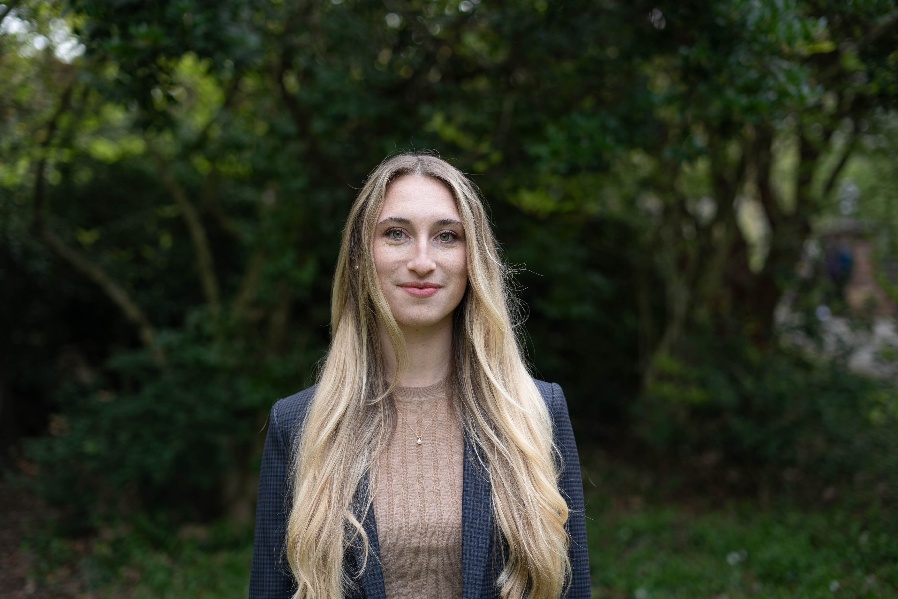
Q: Tell us about yourself and how you got into this field.
I’m a PhD student studying environmental health at the University of Washington in Seattle. My dissertation work focuses on using hair to biomonitor for heavy metal exposures. Specifically, I use a technique that pairs a laser with inductively coupled plasma mass spectrometry (ICP-MS), the gold standard method for analyzing lead in blood and hair samples.
Q: How does the hair-testing method actually work?
Laser ablation ICP-MS runs a laser lengthwise along a strand of hair, quantifying lead and other metals’ concentrations along its length. Because hair grows continuously and is fed by the blood supply, circulating metals in the body get deposited in the hair as it grows. That means the spatial profile along a hair strand also reflects a timeline of past exposure — it’s a relatively novel technique, and I’m working to expand its application to infants.
Q: What’s the advantage over standard blood testing?
It’s not cheaper, but it offers a detailed profile of past metal exposures. Blood lead testing can’t provide this timeline of past exposures, rather it gives you a single snapshot of a dynamic system — blood is constantly being filtered by the kidneys and liver. Laser ablation ICP-MS also uses very little sample — a few hair strands can show whether lead exposure has been consistently high, consistently low, or peaked at a particular point in time — something a blood test alone can’t capture.
Q: Who does this research focus on, and why?
My dissertation research studies a birth cohort of mothers and infants in Nairobi, Kenya — specifically in a community called Dandora, an area near a large dump site where informal lead-acid battery recycling has been observed. That’s part of why we’re concerned about this community’s exposure to both air pollution and heavy metals like lead.
Detailed exposure profiles are especially valuable for newborns and infants who go through critical periods of neurodevelopment. We collected hair samples from infants at 12 months old, so we have a retrospective timeline of exposure ending at about 12 months of age. We can assess, for the exposure window we have, how those exposures overlap with developmental processes. Alongside lead, we’re also able to look at other heavy metals like mercury, cadmium, and arsenic.
Q: What are you working on at Pure Earth this summer?
I’m splitting my time between the Programs and Technical teams, which I really enjoy because it lets me get experience with community-based studies and data analysis.
On the programs side, I’m helping the Asia team with data analysis on a a Home-Based Assessment in Indonesia, looking at how blood lead levels associate with household sources of lead — drawing on my background working with XRF (X-ray fluorescence) data.
I am working with the technical team to help design a leachate analysis study —aimed at minimizing variability when testing how lead leaches from cookware into food. My past cookware-leaching research at UW, plus experience writing IRB protocols, has been useful here.
Q: You move between the technical and programs teams — what’s that like?
Honestly, I don’t experience it as a harsh transition, and I think that reflects the reality of community-based research. You need a technical mindset even when you’re deep in implementation conversations — and vice versa: community and implementation considerations matter even on highly technical calls about study protocols. My research has mostly been in lab-based settings, so this internship is helping me learn to keep community realities in mind, even while doing technical work.
Q: Anything fun you’re up to outside the internship?
I got lucky with living on Upper West Side, so I’ve been exploring the neighborhood a lot — walking through Riverside Park whenever I get the chance. I’m also a big fan of the arts: I’ve been to ABT at the Met and caught a few Broadway shows.
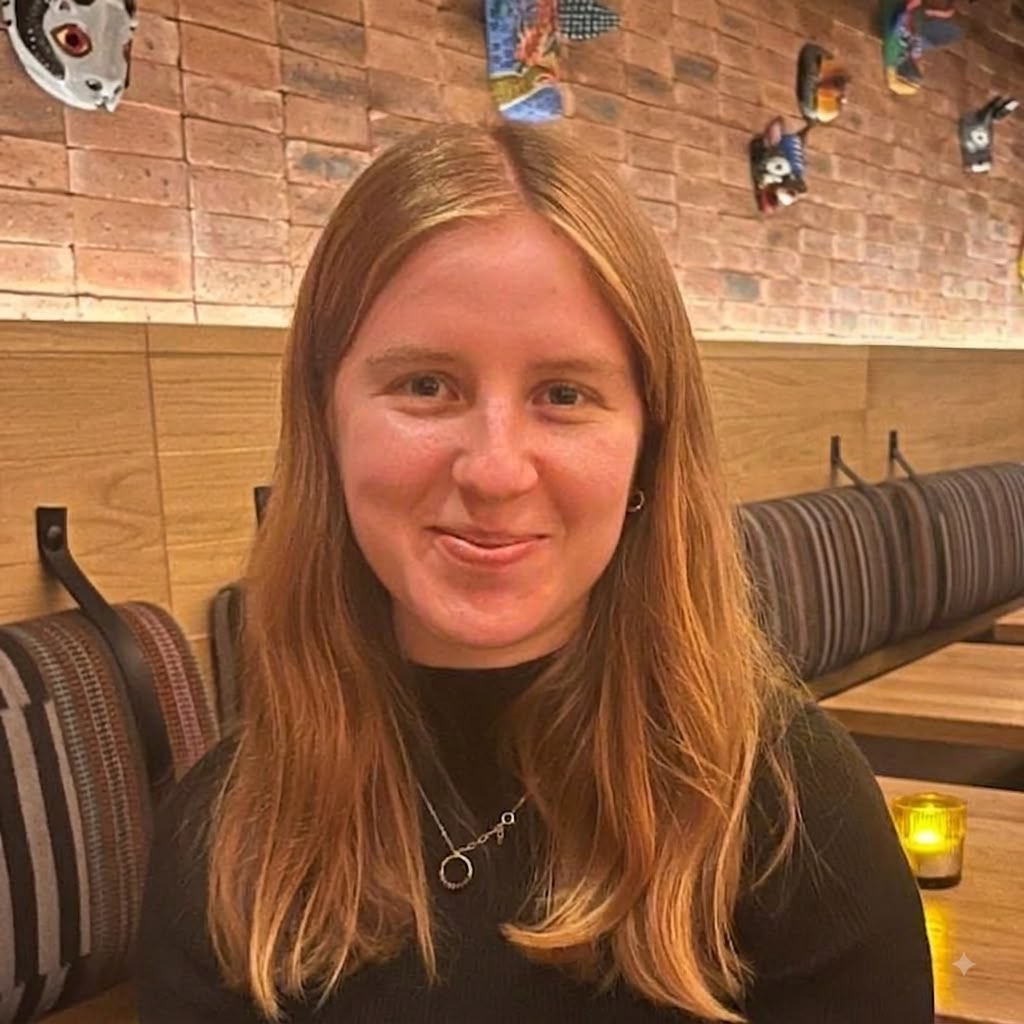
Q: Tell us about yourself and how you got interested in this field.
I just graduated from undergrad at Yale, where I studied sociology with a focus on economic policy. My thesis focused on housing policy, but I’ve always been interested in supply-and-demand-based approaches to social change, and a lot of what I focused on was state-level policy.
I first learned about lead poisoning in a class on economic inequality in the U.S., and I was blown away by how severe an issue it was — I’d barely heard about it outside of random mentions of paint. My friend (and fellow intern), Yona, connected me with people from Clean Lead, and I was fascinated by how creatively they were thinking about policy solutions, including U.S.-based ones — especially since their broader focus is issues outside the U.S.
Q: What are you doing day-to-day at Clean Lead — meeting with legislators, pushing demand-side legislation at the state and federal level? And how does Clean Lead approach both levers?
At the state level, the thinking is that federal progress can be more difficult depending on the issue, so there’s more room for movement in the states — especially if we’re strategic about targeting states with larger populations or a bigger concentration of relevant industry. That lets us potentially accomplish more with relatively smaller efforts.
Population size is one factor, but we’re also thinking about whether a state’s legislature seems open to getting something done. So we’re working — or hoping to work — in some smaller states that seem more straightforward, where we can get an earlier win to point to. For example, we’re working in Connecticut right now, which is small but relatively accessible and has relevant history. The idea is that early momentum there can help build toward bigger states.
Q: I know you’ve also been working directly with Pure Earth — can you talk about that project, and where it sits organizationally?
I worked with the technical team on a project that was tied to the “Year 2” geographies — the next round of Bloomberg-supported countries Pure Earth is preparing in-depth reports on ahead of targeted program work. They wanted a preliminary overview, through desk research, of what’s publicly available on lead acid battery recycling and lead mass balance in those countries before the more in-depth research begins. I worked on five countries and did as deep a dive as I could into battery stock — vehicle registration statistics, the state of large-scale solar and solar home systems, and a bit on lead mining.
My actual goal wasn’t to produce final numbers — it was to map out where the information exists and how to access it, more like an annotated bibliography. Some countries have closed systems or limited data so even something like vehicle registration data can be hard to track down; the agency that would publish it might not have a website for example.
The goal, ultimately, is to estimate how much lead pollution is happening in a given country, and one of the first layers of that estimate is knowing how many used lead-acid batteries are being generated each year, mainly from vehicles, but also telecom and solar.
Take South Africa: a large country with lots of vehicles, a domestic lead mine, and a lot of relatively high-standard battery recycling capacity, plus a large photovoltaic solar landscape. That paints one kind of picture. A smaller country like Malawi looks very different — electrification and grid connection rates are low, so there are a lot of solar home system batteries, and Malawi has no true formal recycling, high-standard or low-standard, so what recycling does happen is unsafe.
Q: What’s it been like speaking with legislators across both sides of the aisle? What do you think is resonating about the ULAB issue?
One of the most interesting parts of the internship has been figuring out, first, how to clearly explain the problem and our proposed solution, and second, how to get people to care about lead— that’s been a bit of trial and error.
Everyone has some association with the word “lead,” but those associations vary a lot by generation and geography. So part of what we’ve learned is how to connect ULAB recycling to what people already know about lead, while explaining what’s different.
For example, some parts of the country have devastating legacies of industrial lead pollution — Connecticut has some legacy industrial sites, and California had a serious battery-recycling-facility lead poisoning disaster, so that’s a closer-to-home reference point there. New York is different: there’s a lot of lead pipe legislation happening right now, and lead pipes are a very visible, familiar issue for people there.
But then you also have to help people understand that ULABs are a distinct issue — and I think there’s a generational element to this too. I realized this trying to explain my work to family friends: my parents’ generation grew up hearing about lead constantly, but usually in the context of gasoline and paint. So they’re used to hearing about lead, just not in this context, and it’s an interesting challenge figuring out how to bridge from what they already know to this new idea.
Q: Anything fun you’re up to outside the internship?
Right after I finished, I visited my college roommate in Ireland — Galway and Belfast. During the internship itself, one fun thing I got to do that I’d never done before was Shakespeare in the Park at Carl Schurz Park.

Q: Tell us about yourself. Where are you in school?
I’m a rising senior at Harvard, where I study Social Studies. I’m also part of a fellowship called the Moral Ambition Fellowship. I was looking for an internship this summer, and my fellowship supervisor pointed me to a New York Times article about unsafe battery recycling in Nigeria — pollution from smelting lead out of used lead-acid batteries was poisoning entire communities, and the recycled lead was being shipped to U.S. automakers. She got in touch with Coefficient Giving, and they said, well, we funded this project called Clean Lead, and it’s probably the highest impact thing you can do this summer.
Q: What is Clean Lead, and what’s the core idea behind it?
Clean Lead exists to change U.S. demand for unsafely recycled lead coming from countries where recycling practices are dangerous. We want to incentivize clean recycling by saying, well, to sell your lead to the US, you’re going to have to meet a minimum safety standard. So we’re pushing for policy changes around lead imports on the state and federal levels.
Q: How do you get people — especially legislators — to care about an issue as technical and under-the-radar as used lead-acid battery recycling?
“Under-the-radar” is nice. I usually say “unsexy.”
The honest answer is you connect it to something people already care about. Associations with the word “lead” vary a lot by generation and geography, so part of the work is figuring out the right bridge for each audience. Some places have their own histories with lead that make it personal — Connecticut has legacy industrial sites, California had the Exide disaster, and in New York, a lot of our pipes are still made of lead.
My boss has a saying that lead is like a Swiss Army knife of harm: if you care about malnutrition, lead makes it worse; if you care about violence, lead makes it worse; if you care about cognitive development or economic growth, lead makes those worse too. And closer to home, we’ve found the most traction with moms. They know they don’t want their kid to be lead poisoned and probably a mom across the world doesn’t want her kid to be lead poisoned either.
Q: What has been your favorite part of the internship so far?
My favorite part is going down rabbit holes of really niche stuff that might solve the problem. Trade policy from 1994, California human trafficking supply tracing. This is what I really enjoy, figuring out, okay, what already exists on the books, how can we use these tools in unexpected ways? I loved talking with a lawyer who drafted the countervailing duties trade regulations in 2024 and added environmental protections. The other day, I stayed up late researching oral chelates (when you eat something that makes the heavy metal in you go away) trying to figure out why the off-patent oral chelates cost so much, even though they’re really easy to compound.
Q: How has your interest in effective altruism (EA) shaped how you approach this work?
I’d call myself EA-adjacent. I think the EA community gets a lot right in pushing people to ask, concretely, where their effort or resources can have the most impact.
Q: Anything fun about the internship outside of the work itself?
Pure Earth’s office is in the Interchurch Center, and the Interchurch Center is filled with wonders. There’s a library on the second floor that has Amish romances and a bunch of Christian theology stuff and the 9-11 report.

Q: Tell us about yourself and how you got into this field.
I’m a rising senior at Harvard studying statistics and economics. My background before this was more technical and analytical. I’ve interned in private equity, done data science and product management at a mental health startup, and worked on machine learning at an established app company. I wanted to apply my skill set to tackle a meaningful problem, and I joined Clean Lead as the founding technical fellow.
I first got exposed to the issue when I read a New York Times article on it. It was very well-evidenced, and it felt like a problem that had an obvious solution. It reminded me of how the conflict-minerals movement addressed sourcing issues in the Congo, and I believed something similar could work for lead. Laura, from the Moral Ambition Fellowship, introduced me to the team at Clean Lead and we were all thinking along the same lines.
Q: How did the Moral Ambition Fellowship factor into this?
Actually my fellowship director sent me over that New York Times article! The fellowship expanded what I thought was possible for my career. I always wanted to contribute to solving humanitarian problems, but I assumed it would be something I’d do down the line. When I saw posters for the fellowship on campus, it looked like a great opportunity to explore something different, so I applied. Once I got in, it felt like too rare an opportunity to pass up. The chance to do something like this in college doesn’t come around often.
Q: What drew you to Clean Lead specifically, versus a larger organization?
I wanted a small team where everyone could actually see the impact of their work. Clean Lead is small, and everyone has their own lane with a lot of independence within it. It feels empowering, and I think it’s well-suited to making an impact. With something this focused, a small team working on one clear goal can move faster than a larger organization juggling many priorities at once.
Q: What does your day-to-day work as the technical fellow actually look like?
I’m mainly responsible for anything related to software, whether that be creating internal tools that allow us to work faster or finding data and making it public-facing. My first project was improving a dashboard that tracks U.S. imports and exports of lead. Since then I’ve built a second one that works off of port-level import records. All goods that are imported into the U.S. get logged, and I’ve been tracking which countries lead is coming from and trying to trace who’s actually purchasing it. That part is harder, since some companies can get themselves removed from the documentation through an appeals process. Where I can, I trace it back to the selling factory and the port-level buyer. Right now we’re trying to get even more granular by working with people who’ve mapped similar supply chains in other industries to figure out how to trace lead all the way from a port buyer to the actual battery manufacturer.
Some of my other main projects include a tool that automated outreach for Yona and Eden, so we could send emails at scale and set up meetings more efficiently; a library that pulls together roughly 20,000 papers on lead into a query-able database; a landing page for Clean Lead; and a website that explains the connection between lead and violence across the world.
Q: How do you explain an issue as technical as ULAB (used lead-acid battery) recycling to someone who’s never heard of it?
I try to break it down as simply as possible, usually starting with something people already understand: their car battery. I explain that a lot of car batteries get shipped overseas, where the lead inside them is recycled in ways that are extremely damaging and poisonous, because it’s the cheapest option. If there were no demand for that badly recycled lead, in theory those recyclers would be forced toward safer alternatives. That’s the whole thesis behind Clean Lead. I usually reference the New York Times piece, and I’ll point out that most of the lead going into new car batteries today isn’t freshly mined; it’s almost certainly recycled from an older battery. That’s just the state of the industry right now.
Q: What’s it been like working with the Pure Earth team?
I first met people from Pure Earth, including President Drew McCartor, at a lead conference in London. That was actually my very first day working on lead issues at all. I flew straight into the conference without any prior lead-specific work, and being around people so focused on one clearly impactful goal was inspiring; it confirmed I’d made the right call. Since then, I’ve mostly worked with Michael Pusic as my supervisor, and I’ve found his style really encouraging. He’s got a lot going on, but he’s always available to answer questions and makes it feel okay if you don’t get something right the first time. For example, I put together a back-of-the-envelope cost-benefit analysis using CGD’s framework . The first version wasn’t great, but he encouraged me to revise it, and the second version gave us some real, useful insight. I felt genuinely supported through that process.
Q: You were recently interviewed by The New Yorker — what was that experience like?
All of the fellows went through media training beforehand, in case any of us were selected for interviews. The big piece of advice was to come in with three core messages, since three is enough to make your point without diluting it; whatever you’re asked, you try to steer back to one of those points. Mine were: lead poisoning is a massive, underappreciated problem; I personally had no idea about the scale of the issue before the Moral Ambition Fellowship; and because of that, I now see how much opportunity there is to build a career around solving problems like this that are being overlooked. The interview itself spent the first half mostly on lead and the scale of the problem, then moved into the fellowship and my background. I saw it as another way to spread awareness. If someone reads it and gets curious enough to learn more about lead, that’s super worthwhile. I felt like I had a bit of a duty to do that, given how many people don’t know about the issue that’s harming millions of kids around the world.
Q: Anything fun outside the internship?
I’ve mostly been hanging out with friends and playing basketball around the city. I’m taking a big trip to Peru later this summer to climb Machu Picchu with my sister!

Q: Tell us about yourself — are you in school, and how did you first get interested in Pure Earth and lead poisoning work?
I am a headed to Rochester Institute of Technology in the fall to study cybersecurity. I first found out about this through a longtime family friend, as I had been searching for an internship, and this seemed like an excellent opportunity because it was a chance to help a company working to better the world.
Q: What interested you about working here specifically?
Beyond the work experience itself, I really like the feeling that I’m doing something good — working for a nonprofit that’s trying to help prevent childhood lead poisoning, rather than, say, a big for-profit company. This position also seemed like a good chance to hone my skills with computers and Microsoft programs, something very relevant to the field I plan on entering.
Q: What have you been working on during the internship?
I’m working almost entirely in SharePoint, moving files around and helping out different teams. I spent most of my time early on supporting the development team, but that work is largely finished now, so I’ve moved over to operations.
Q: Can you talk about the file system transition you’ve been working on?
Originally, there was a huge number of files — including files nested inside other files — so it was a real mess, with a lot of duplicates taking up space and adding confusion. What I’ve been doing is sorting everything into its own library and assigning metadata to it. That makes things much easier to search and filter, especially for anyone unfamiliar with the old system — which, honestly, most people probably were, since it wasn’t very consistent to begin with. Every team seemed to organize things a little differently, so a big part of this is standardizing that across the board.
Q: How do you explain metadata to people who aren’t familiar with it?
Metadata is basically information you assign to a document or file — it can take a lot of forms: a date, a location, a description, a category. It helps you find something specific quickly if you know what you’re looking for – and helps you filter and discover things even if you don’t. The old system technically worked if you were browsing inside folders, but the moment a file gets shared or moved outside its folder, you lose all context for what it is — metadata fixes that, even for files that share the same name.
Q: Anything fun you’ve been up to outside of work this summer?
Nothing too exciting — mostly getting ready for college, which comes with its share of excitement and nerves. I’m also working on getting my driver’s license soon, and trying rock climbing for the first time.
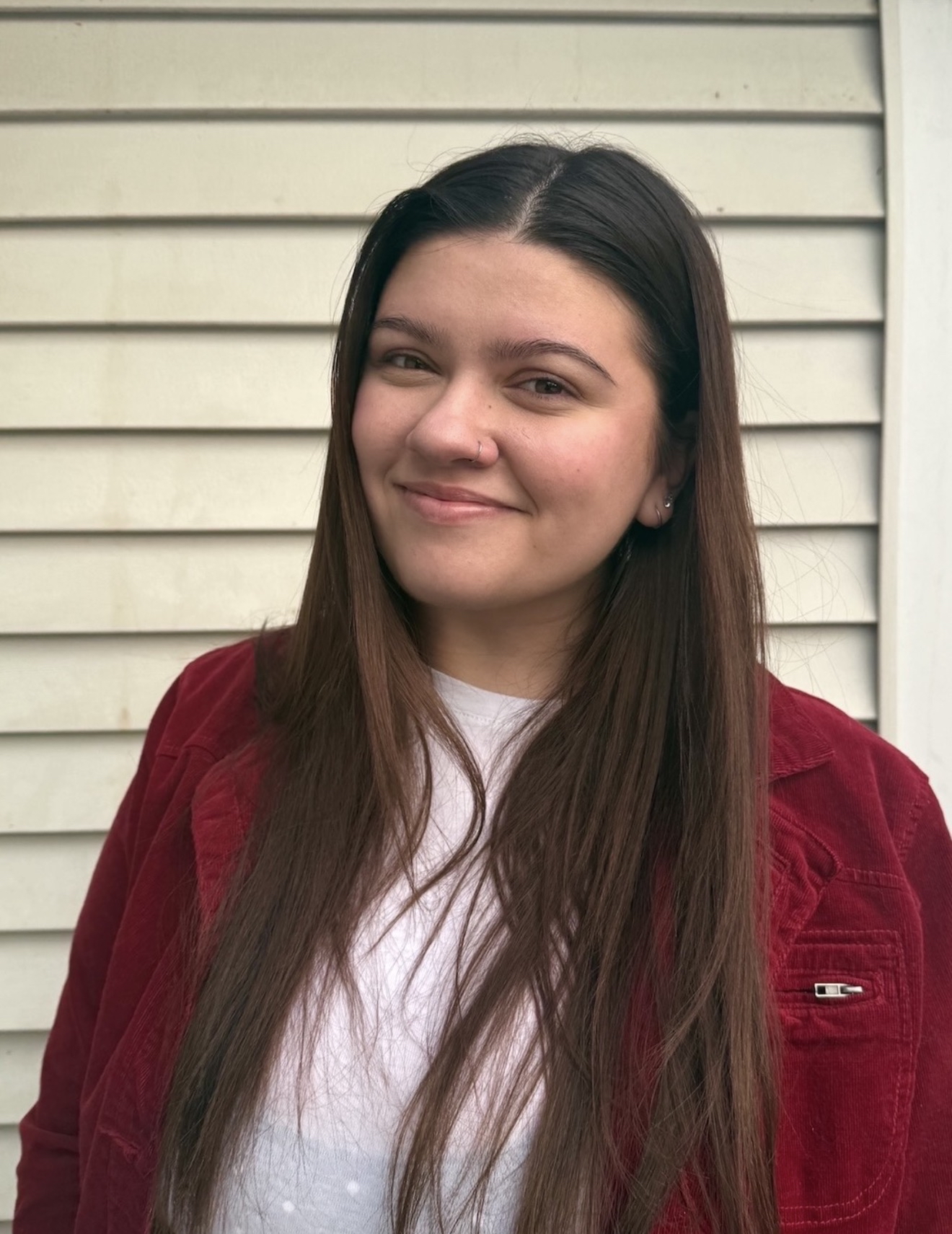
Tell us a little about yourself — how did you first get interested in Pure Earth and the lead poisoning field?
I just recently graduated from SUNY New Paltz, so I’m very fresh into the working world right now — which is exciting . I actually first heard about Pure Earth through a family friend.
But what really drew me in was my previous job. I was working in marketing and advertising and my boss at the time had a partner organization that was his own nonprofit. That’s when I started getting more interested in humanitarian work. My dad has worked in the nonprofit sector my whole life, and I’ve always been drawn to community service and work that’s for the greater good.
On the HR side specifically, it was a natural fit: I consider myself a people person, I like the communication side of the work, and I wanted more general office experience. That combination is what brought me to Pure Earth.
What have you been working on this summer as part of the Operations team?
I’ve mainly been focused on launching our HR SharePoint site. Pure Earth recently switched over to Microsoft, which came with a lot of changes, so I’ve been organizing the files we want on a central site for all Pure Earth staff so there’s one place to find job resources, job descriptions, templates, and more. I’ve been designing the SharePoint site itself and working closely with Liz Wood, who’s been incredibly knowledgeable and helpful in teaching me the ropes. I’ve also been running surveys.
It’s been interesting learning the internal mechanics of a team from the inside — the recruitment side especially. I’ve applied to plenty of jobs and sat through my share of interviews, but seeing what’s happening behind the scenes — what recruiters are actually looking for — has been fascinating.
What’s it been like being in Operations while Pure Earth is growing so quickly?
We have operations meetings once a week, and in nearly every one since I started, we’ve been talking about multiple new hires happening that same week.
It’s been all hands on deck, because there are so many moving parts. The recruitment process is lengthy, and with growth comes a higher demand from managers for resources and job descriptions.
Can you speak to Pure Earth’s mission and values, and what you’ve noticed about the culture?
I think the culture and values really show through the people who work here. Part of what I’ve learned through the recruitment process is that Pure Earth isn’t just looking for qualified candidates with a lot of experience. What really stands out is passion for the work. The more you learn about lead poisoning and lead pollution, the more you realize what a major issue it is.
I’ve also seen firsthand, in just a few weeks in the office, how kind, warm, and personable everyone is — and that really comes through in the hiring process. That’s not something you find everywhere.
What’s something that’s surprised you this summer?
Honestly, I feel like everything has surprised me in some way, partly because this is all new to me — I’ve worked remotely and in a production office before, but never in an environment quite like this. I think the culture has been the most surprising part: the kinds of meetings we have, how people actively want to keep learning, and how managers here work with you rather than against you.
Learning about lead pollution and lead poisoning as a whole has also been surprising, and honestly motivating — it makes you want to do good work and actually make a difference.
Anything fun you’ve been up to this summer, outside of work?
Outside of work, I’m also an artist — painting is probably my biggest personal passion. I mostly work in acrylic and oil, and I do a lot of surrealist portraits. It can be a little unsettling for some people, but it’s my thing.
I’ve been going to the beach a lot and working on my art whenever I can. I also traveled in June, which was amazing — travel is something I love and want to keep doing as much as possible going forward.
Meet Our Summer 2026 Interns: This summer, six interns worked alongside our programs, operations, and technical teams at Pure Earth — including three Coalition for Clean Lead fellows who focused on used lead acid battery (ULAB) analysis and ending preventable lead poisoning through supply chain accountability. Learn more about what they worked on below. 1.) Abigail Gilbert (Programs Team) Q: Tell us about yourself and how you got into this… Read More The Pollution Blog
This summer, six interns worked alongside our programs, operations, and technical teams at Pure Earth — including three Coalition for Clean Lead fellows who focused on used lead acid battery (ULAB) analysis and ending preventable lead poisoning through supply chain accountability. Learn more about what they worked on below.
Q: Tell us about yourself and how you got into this field.
I’m a PhD student studying environmental health at the University of Washington in Seattle. My dissertation work focuses on using hair to biomonitor for heavy metal exposures. Specifically, I use a technique that pairs a laser with inductively coupled plasma mass spectrometry (ICP-MS), the gold standard method for analyzing lead in blood and hair samples.
Q: How does the hair-testing method actually work?
Laser ablation ICP-MS runs a laser lengthwise along a strand of hair, quantifying lead and other metals’ concentrations along its length. Because hair grows continuously and is fed by the blood supply, circulating metals in the body get deposited in the hair as it grows. That means the spatial profile along a hair strand also reflects a timeline of past exposure — it’s a relatively novel technique, and I’m working to expand its application to infants.
Q: What’s the advantage over standard blood testing?
It’s not cheaper, but it offers a detailed profile of past metal exposures. Blood lead testing can’t provide this timeline of past exposures, rather it gives you a single snapshot of a dynamic system — blood is constantly being filtered by the kidneys and liver. Laser ablation ICP-MS also uses very little sample — a few hair strands can show whether lead exposure has been consistently high, consistently low, or peaked at a particular point in time — something a blood test alone can’t capture.
Q: Who does this research focus on, and why?
My dissertation research studies a birth cohort of mothers and infants in Nairobi, Kenya — specifically in a community called Dandora, an area near a large dump site where informal lead-acid battery recycling has been observed. That’s part of why we’re concerned about this community’s exposure to both air pollution and heavy metals like lead.
Detailed exposure profiles are especially valuable for newborns and infants who go through critical periods of neurodevelopment. We collected hair samples from infants at 12 months old, so we have a retrospective timeline of exposure ending at about 12 months of age. We can assess, for the exposure window we have, how those exposures overlap with developmental processes. Alongside lead, we’re also able to look at other heavy metals like mercury, cadmium, and arsenic.
Q: What are you working on at Pure Earth this summer?
I’m splitting my time between the Programs and Technical teams, which I really enjoy because it lets me get experience with community-based studies and data analysis.
On the programs side, I’m helping the Asia team with data analysis on a a Home-Based Assessment in Indonesia, looking at how blood lead levels associate with household sources of lead — drawing on my background working with XRF (X-ray fluorescence) data.
I am working with the technical team to help design a leachate analysis study —aimed at minimizing variability when testing how lead leaches from cookware into food. My past cookware-leaching research at UW, plus experience writing IRB protocols, has been useful here.
Q: You move between the technical and programs teams — what’s that like?
Honestly, I don’t experience it as a harsh transition, and I think that reflects the reality of community-based research. You need a technical mindset even when you’re deep in implementation conversations — and vice versa: community and implementation considerations matter even on highly technical calls about study protocols. My research has mostly been in lab-based settings, so this internship is helping me learn to keep community realities in mind, even while doing technical work.
Q: Anything fun you’re up to outside the internship?
I got lucky with living on Upper West Side, so I’ve been exploring the neighborhood a lot — walking through Riverside Park whenever I get the chance. I’m also a big fan of the arts: I’ve been to ABT at the Met and caught a few Broadway shows.
Q: Tell us about yourself and how you got interested in this field.
I just graduated from undergrad at Yale, where I studied sociology with a focus on economic policy. My thesis focused on housing policy, but I’ve always been interested in supply-and-demand-based approaches to social change, and a lot of what I focused on was state-level policy.
I first learned about lead poisoning in a class on economic inequality in the U.S., and I was blown away by how severe an issue it was — I’d barely heard about it outside of random mentions of paint. My friend (and fellow intern), Yona, connected me with people from Clean Lead, and I was fascinated by how creatively they were thinking about policy solutions, including U.S.-based ones — especially since their broader focus is issues outside the U.S.
Q: What are you doing day-to-day at Clean Lead — meeting with legislators, pushing demand-side legislation at the state and federal level? And how does Clean Lead approach both levers?
At the state level, the thinking is that federal progress can be more difficult depending on the issue, so there’s more room for movement in the states — especially if we’re strategic about targeting states with larger populations or a bigger concentration of relevant industry. That lets us potentially accomplish more with relatively smaller efforts.
Population size is one factor, but we’re also thinking about whether a state’s legislature seems open to getting something done. So we’re working — or hoping to work — in some smaller states that seem more straightforward, where we can get an earlier win to point to. For example, we’re working in Connecticut right now, which is small but relatively accessible and has relevant history. The idea is that early momentum there can help build toward bigger states.
Q: I know you’ve also been working directly with Pure Earth — can you talk about that project, and where it sits organizationally?
I worked with the technical team on a project that was tied to the “Year 2” geographies — the next round of Bloomberg-supported countries Pure Earth is preparing in-depth reports on ahead of targeted program work. They wanted a preliminary overview, through desk research, of what’s publicly available on lead acid battery recycling and lead mass balance in those countries before the more in-depth research begins. I worked on five countries and did as deep a dive as I could into battery stock — vehicle registration statistics, the state of large-scale solar and solar home systems, and a bit on lead mining.
My actual goal wasn’t to produce final numbers — it was to map out where the information exists and how to access it, more like an annotated bibliography. Some countries have closed systems or limited data so even something like vehicle registration data can be hard to track down; the agency that would publish it might not have a website for example.
The goal, ultimately, is to estimate how much lead pollution is happening in a given country, and one of the first layers of that estimate is knowing how many used lead-acid batteries are being generated each year, mainly from vehicles, but also telecom and solar.
Take South Africa: a large country with lots of vehicles, a domestic lead mine, and a lot of relatively high-standard battery recycling capacity, plus a large photovoltaic solar landscape. That paints one kind of picture. A smaller country like Malawi looks very different — electrification and grid connection rates are low, so there are a lot of solar home system batteries, and Malawi has no true formal recycling, high-standard or low-standard, so what recycling does happen is unsafe.
Q: What’s it been like speaking with legislators across both sides of the aisle? What do you think is resonating about the ULAB issue?
One of the most interesting parts of the internship has been figuring out, first, how to clearly explain the problem and our proposed solution, and second, how to get people to care about lead— that’s been a bit of trial and error.
Everyone has some association with the word “lead,” but those associations vary a lot by generation and geography. So part of what we’ve learned is how to connect ULAB recycling to what people already know about lead, while explaining what’s different.
For example, some parts of the country have devastating legacies of industrial lead pollution — Connecticut has some legacy industrial sites, and California had a serious battery-recycling-facility lead poisoning disaster, so that’s a closer-to-home reference point there. New York is different: there’s a lot of lead pipe legislation happening right now, and lead pipes are a very visible, familiar issue for people there.
But then you also have to help people understand that ULABs are a distinct issue — and I think there’s a generational element to this too. I realized this trying to explain my work to family friends: my parents’ generation grew up hearing about lead constantly, but usually in the context of gasoline and paint. So they’re used to hearing about lead, just not in this context, and it’s an interesting challenge figuring out how to bridge from what they already know to this new idea.
Q: Anything fun you’re up to outside the internship?
Right after I finished, I visited my college roommate in Ireland — Galway and Belfast. During the internship itself, one fun thing I got to do that I’d never done before was Shakespeare in the Park at Carl Schurz Park.
Q: Tell us about yourself. Where are you in school?
I’m a rising senior at Harvard, where I study Social Studies. I’m also part of a fellowship called the Moral Ambition Fellowship. I was looking for an internship this summer, and my fellowship supervisor pointed me to a New York Times article about unsafe battery recycling in Nigeria — pollution from smelting lead out of used lead-acid batteries was poisoning entire communities, and the recycled lead was being shipped to U.S. automakers. She got in touch with Coefficient Giving, and they said, well, we funded this project called Clean Lead, and it’s probably the highest impact thing you can do this summer.
Q: What is Clean Lead, and what’s the core idea behind it?
Clean Lead exists to change U.S. demand for unsafely recycled lead coming from countries where recycling practices are dangerous. We want to incentivize clean recycling by saying, well, to sell your lead to the US, you’re going to have to meet a minimum safety standard. So we’re pushing for policy changes around lead imports on the state and federal levels.
Q: How do you get people — especially legislators — to care about an issue as technical and under-the-radar as used lead-acid battery recycling?
“Under-the-radar” is nice. I usually say “unsexy.”
The honest answer is you connect it to something people already care about. Associations with the word “lead” vary a lot by generation and geography, so part of the work is figuring out the right bridge for each audience. Some places have their own histories with lead that make it personal — Connecticut has legacy industrial sites, California had the Exide disaster, and in New York, a lot of our pipes are still made of lead.
My boss has a saying that lead is like a Swiss Army knife of harm: if you care about malnutrition, lead makes it worse; if you care about violence, lead makes it worse; if you care about cognitive development or economic growth, lead makes those worse too. And closer to home, we’ve found the most traction with moms. They know they don’t want their kid to be lead poisoned and probably a mom across the world doesn’t want her kid to be lead poisoned either.
Q: What has been your favorite part of the internship so far?
My favorite part is going down rabbit holes of really niche stuff that might solve the problem. Trade policy from 1994, California human trafficking supply tracing. This is what I really enjoy, figuring out, okay, what already exists on the books, how can we use these tools in unexpected ways? I loved talking with a lawyer who drafted the countervailing duties trade regulations in 2024 and added environmental protections. The other day, I stayed up late researching oral chelates (when you eat something that makes the heavy metal in you go away) trying to figure out why the off-patent oral chelates cost so much, even though they’re really easy to compound.
Q: How has your interest in effective altruism (EA) shaped how you approach this work?
I’d call myself EA-adjacent. I think the EA community gets a lot right in pushing people to ask, concretely, where their effort or resources can have the most impact.
Q: Anything fun about the internship outside of the work itself?
Pure Earth’s office is in the Interchurch Center, and the Interchurch Center is filled with wonders. There’s a library on the second floor that has Amish romances and a bunch of Christian theology stuff and the 9-11 report.
Q: Tell us about yourself and how you got into this field.
I’m a rising senior at Harvard studying statistics and economics. My background before this was more technical and analytical. I’ve interned in private equity, done data science and product management at a mental health startup, and worked on machine learning at an established app company. I wanted to apply my skill set to tackle a meaningful problem, and I joined Clean Lead as the founding technical fellow.
I first got exposed to the issue when I read a New York Times article on it. It was very well-evidenced, and it felt like a problem that had an obvious solution. It reminded me of how the conflict-minerals movement addressed sourcing issues in the Congo, and I believed something similar could work for lead. Laura, from the Moral Ambition Fellowship, introduced me to the team at Clean Lead and we were all thinking along the same lines.
Q: How did the Moral Ambition Fellowship factor into this?
Actually my fellowship director sent me over that New York Times article! The fellowship expanded what I thought was possible for my career. I always wanted to contribute to solving humanitarian problems, but I assumed it would be something I’d do down the line. When I saw posters for the fellowship on campus, it looked like a great opportunity to explore something different, so I applied. Once I got in, it felt like too rare an opportunity to pass up. The chance to do something like this in college doesn’t come around often.
Q: What drew you to Clean Lead specifically, versus a larger organization?
I wanted a small team where everyone could actually see the impact of their work. Clean Lead is small, and everyone has their own lane with a lot of independence within it. It feels empowering, and I think it’s well-suited to making an impact. With something this focused, a small team working on one clear goal can move faster than a larger organization juggling many priorities at once.
Q: What does your day-to-day work as the technical fellow actually look like?
I’m mainly responsible for anything related to software, whether that be creating internal tools that allow us to work faster or finding data and making it public-facing. My first project was improving a dashboard that tracks U.S. imports and exports of lead. Since then I’ve built a second one that works off of port-level import records. All goods that are imported into the U.S. get logged, and I’ve been tracking which countries lead is coming from and trying to trace who’s actually purchasing it. That part is harder, since some companies can get themselves removed from the documentation through an appeals process. Where I can, I trace it back to the selling factory and the port-level buyer. Right now we’re trying to get even more granular by working with people who’ve mapped similar supply chains in other industries to figure out how to trace lead all the way from a port buyer to the actual battery manufacturer.
Some of my other main projects include a tool that automated outreach for Yona and Eden, so we could send emails at scale and set up meetings more efficiently; a library that pulls together roughly 20,000 papers on lead into a query-able database; a landing page for Clean Lead; and a website that explains the connection between lead and violence across the world.
Q: How do you explain an issue as technical as ULAB (used lead-acid battery) recycling to someone who’s never heard of it?
I try to break it down as simply as possible, usually starting with something people already understand: their car battery. I explain that a lot of car batteries get shipped overseas, where the lead inside them is recycled in ways that are extremely damaging and poisonous, because it’s the cheapest option. If there were no demand for that badly recycled lead, in theory those recyclers would be forced toward safer alternatives. That’s the whole thesis behind Clean Lead. I usually reference the New York Times piece, and I’ll point out that most of the lead going into new car batteries today isn’t freshly mined; it’s almost certainly recycled from an older battery. That’s just the state of the industry right now.
Q: What’s it been like working with the Pure Earth team?
I first met people from Pure Earth, including President Drew McCartor, at a lead conference in London. That was actually my very first day working on lead issues at all. I flew straight into the conference without any prior lead-specific work, and being around people so focused on one clearly impactful goal was inspiring; it confirmed I’d made the right call. Since then, I’ve mostly worked with Michael Pusic as my supervisor, and I’ve found his style really encouraging. He’s got a lot going on, but he’s always available to answer questions and makes it feel okay if you don’t get something right the first time. For example, I put together a back-of-the-envelope cost-benefit analysis using CGD’s framework . The first version wasn’t great, but he encouraged me to revise it, and the second version gave us some real, useful insight. I felt genuinely supported through that process.
Q: You were recently interviewed by The New Yorker — what was that experience like?
All of the fellows went through media training beforehand, in case any of us were selected for interviews. The big piece of advice was to come in with three core messages, since three is enough to make your point without diluting it; whatever you’re asked, you try to steer back to one of those points. Mine were: lead poisoning is a massive, underappreciated problem; I personally had no idea about the scale of the issue before the Moral Ambition Fellowship; and because of that, I now see how much opportunity there is to build a career around solving problems like this that are being overlooked. The interview itself spent the first half mostly on lead and the scale of the problem, then moved into the fellowship and my background. I saw it as another way to spread awareness. If someone reads it and gets curious enough to learn more about lead, that’s super worthwhile. I felt like I had a bit of a duty to do that, given how many people don’t know about the issue that’s harming millions of kids around the world.
Q: Anything fun outside the internship?
I’ve mostly been hanging out with friends and playing basketball around the city. I’m taking a big trip to Peru later this summer to climb Machu Picchu with my sister!
Q: Tell us about yourself — are you in school, and how did you first get interested in Pure Earth and lead poisoning work?
I am a headed to Rochester Institute of Technology in the fall to study cybersecurity. I first found out about this through a longtime family friend, as I had been searching for an internship, and this seemed like an excellent opportunity because it was a chance to help a company working to better the world.
Q: What interested you about working here specifically?
Beyond the work experience itself, I really like the feeling that I’m doing something good — working for a nonprofit that’s trying to help prevent childhood lead poisoning, rather than, say, a big for-profit company. This position also seemed like a good chance to hone my skills with computers and Microsoft programs, something very relevant to the field I plan on entering.
Q: What have you been working on during the internship?
I’m working almost entirely in SharePoint, moving files around and helping out different teams. I spent most of my time early on supporting the development team, but that work is largely finished now, so I’ve moved over to operations.
Q: Can you talk about the file system transition you’ve been working on?
Originally, there was a huge number of files — including files nested inside other files — so it was a real mess, with a lot of duplicates taking up space and adding confusion. What I’ve been doing is sorting everything into its own library and assigning metadata to it. That makes things much easier to search and filter, especially for anyone unfamiliar with the old system — which, honestly, most people probably were, since it wasn’t very consistent to begin with. Every team seemed to organize things a little differently, so a big part of this is standardizing that across the board.
Q: How do you explain metadata to people who aren’t familiar with it?
Metadata is basically information you assign to a document or file — it can take a lot of forms: a date, a location, a description, a category. It helps you find something specific quickly if you know what you’re looking for – and helps you filter and discover things even if you don’t. The old system technically worked if you were browsing inside folders, but the moment a file gets shared or moved outside its folder, you lose all context for what it is — metadata fixes that, even for files that share the same name.
Q: Anything fun you’ve been up to outside of work this summer?
Nothing too exciting — mostly getting ready for college, which comes with its share of excitement and nerves. I’m also working on getting my driver’s license soon, and trying rock climbing for the first time.
Tell us a little about yourself — how did you first get interested in Pure Earth and the lead poisoning field?
I just recently graduated from SUNY New Paltz, so I’m very fresh into the working world right now — which is exciting . I actually first heard about Pure Earth through a family friend.
But what really drew me in was my previous job. I was working in marketing and advertising and my boss at the time had a partner organization that was his own nonprofit. That’s when I started getting more interested in humanitarian work. My dad has worked in the nonprofit sector my whole life, and I’ve always been drawn to community service and work that’s for the greater good.
On the HR side specifically, it was a natural fit: I consider myself a people person, I like the communication side of the work, and I wanted more general office experience. That combination is what brought me to Pure Earth.
What have you been working on this summer as part of the Operations team?
I’ve mainly been focused on launching our HR SharePoint site. Pure Earth recently switched over to Microsoft, which came with a lot of changes, so I’ve been organizing the files we want on a central site for all Pure Earth staff so there’s one place to find job resources, job descriptions, templates, and more. I’ve been designing the SharePoint site itself and working closely with Liz Wood, who’s been incredibly knowledgeable and helpful in teaching me the ropes. I’ve also been running surveys.
It’s been interesting learning the internal mechanics of a team from the inside — the recruitment side especially. I’ve applied to plenty of jobs and sat through my share of interviews, but seeing what’s happening behind the scenes — what recruiters are actually looking for — has been fascinating.
What’s it been like being in Operations while Pure Earth is growing so quickly?
We have operations meetings once a week, and in nearly every one since I started, we’ve been talking about multiple new hires happening that same week.
It’s been all hands on deck, because there are so many moving parts. The recruitment process is lengthy, and with growth comes a higher demand from managers for resources and job descriptions.
Can you speak to Pure Earth’s mission and values, and what you’ve noticed about the culture?
I think the culture and values really show through the people who work here. Part of what I’ve learned through the recruitment process is that Pure Earth isn’t just looking for qualified candidates with a lot of experience. What really stands out is passion for the work. The more you learn about lead poisoning and lead pollution, the more you realize what a major issue it is.
I’ve also seen firsthand, in just a few weeks in the office, how kind, warm, and personable everyone is — and that really comes through in the hiring process. That’s not something you find everywhere.
What’s something that’s surprised you this summer?
Honestly, I feel like everything has surprised me in some way, partly because this is all new to me — I’ve worked remotely and in a production office before, but never in an environment quite like this. I think the culture has been the most surprising part: the kinds of meetings we have, how people actively want to keep learning, and how managers here work with you rather than against you.
Learning about lead pollution and lead poisoning as a whole has also been surprising, and honestly motivating — it makes you want to do good work and actually make a difference.
Anything fun you’ve been up to this summer, outside of work?
Outside of work, I’m also an artist — painting is probably my biggest personal passion. I mostly work in acrylic and oil, and I do a lot of surrealist portraits. It can be a little unsettling for some people, but it’s my thing.
I’ve been going to the beach a lot and working on my art whenever I can. I also traveled in June, which was amazing — travel is something I love and want to keep doing as much as possible going forward.